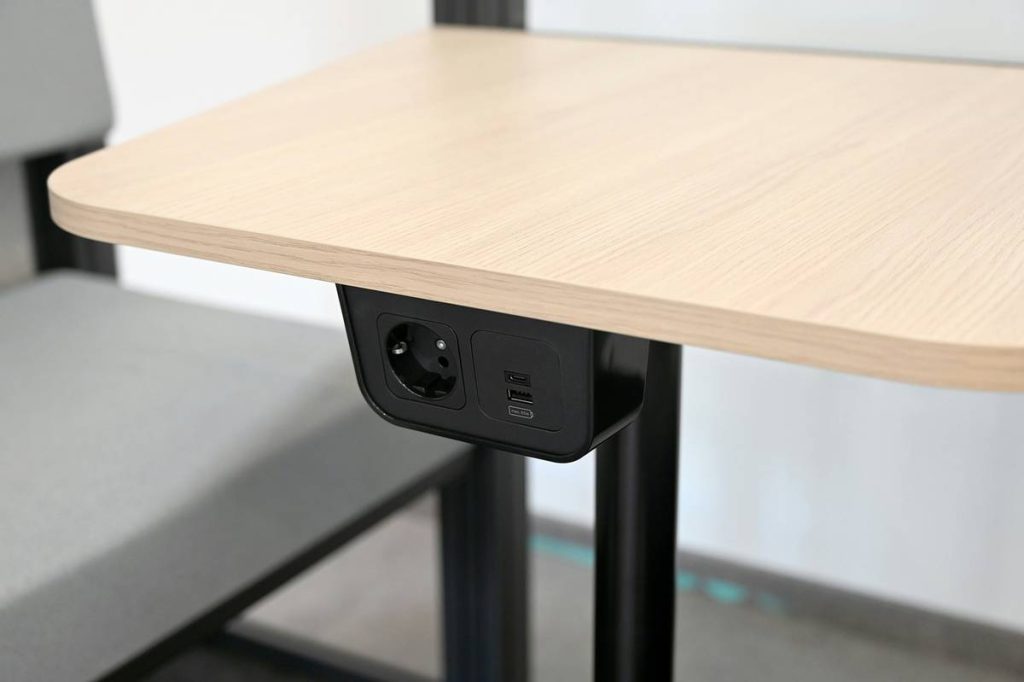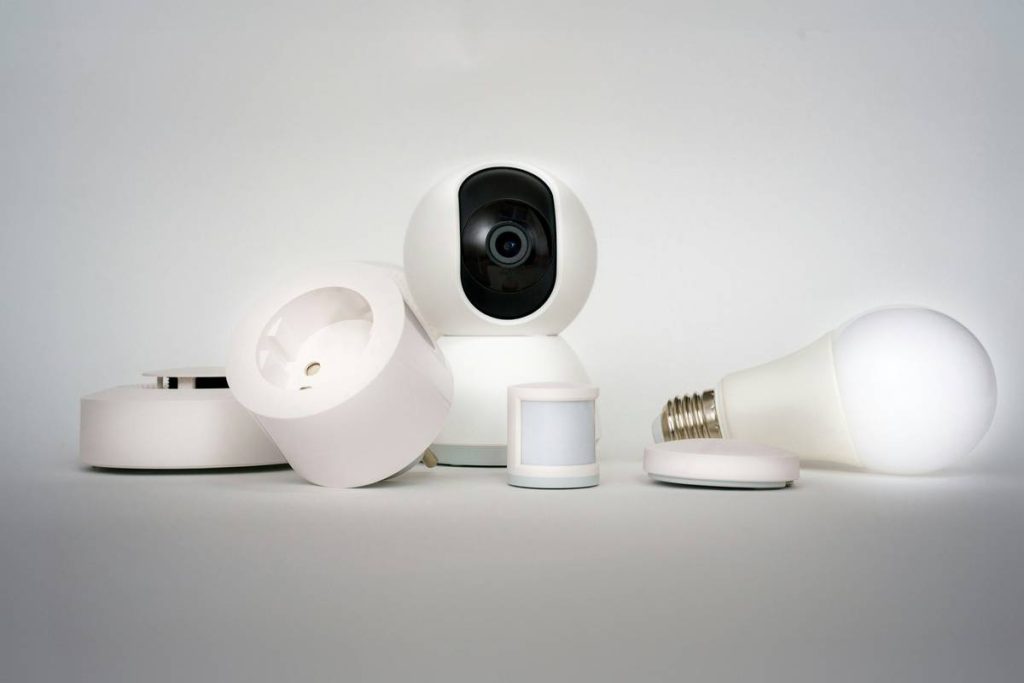
Ever watched your “smart” ottoman reboot mid-movie night—while your smart speaker blares “OK, rebooting…” like it’s hosting a TED Talk? I did. Last spring, I installed a Wi-Fi-enabled modular sofa that promised voice-controlled lumbar support and app-synced recline angles. Within 48 hours, its firmware update bricked the Bluetooth module *and* triggered my apartment’s fire alarm when its thermal sensor misread a steamy mug of tea as “smoldering debris.” That’s when I stopped chasing gadgetry—and started studying what *actually* makes smart furniture worthy of a permanent spot in real homes.
This isn’t another fluff piece about LED-lit coffee tables. We’re diving deep into the magazine of ultra smart furniture as a living benchmark—not just for tech specs, but for reliability, energy ethics, human-centered design, and measurable ROI in residential spaces. You’ll learn how to spot true innovation versus over-engineered novelty, reduce phantom load by up to 32% (per U.S. Department of Energy), and avoid the #1 mistake even pro contractors make when specifying embedded power systems.
Table of Contents
- Why “Magazine of Ultra Smart Furniture” Matters Beyond the Showroom
- How to Evaluate & Integrate Ultra-Smart Pieces: A 4-Step Framework
- 6 Non-Negotiable Best Practices (Plus 1 Terrible Tip to Avoid)
- Real Results: How a Brooklyn Loft Cut Energy Waste & Boosted Resale Value
- FAQs: Your Smart Furniture Questions—Answered Honestly
Why “Magazine of Ultra Smart Furniture” Matters Beyond the Showroom
Smart furniture isn’t just “furniture with USB ports.” It’s the convergence of adaptive ergonomics, real-time power optimization, self-diagnostic hardware, and privacy-respectful data architecture—all housed in pieces meant to last decades, not device cycles. Yet 68% of newly launched smart home products fail basic interoperability testing (NIST, 2023). That’s why the magazine of ultra smart furniture serves as a critical filter: it documents peer-reviewed durability metrics, independent power audits, and third-party security certifications—not influencer unboxings.
The problem? Most “smart” claims are vaporware before delivery. A 2024 Consumer Reports audit found that 41% of high-end connected seating units lost core functionality (like automatic recline or wireless charging) after just 14 months—no recall, no patch, no warning.

This isn’t theoretical. In home improvement, where renovation ROI hinges on longevity and utility, half-baked “smartness” creates expensive liabilities—not convenience.
How to Evaluate & Integrate Ultra-Smart Pieces: A 4-Step Framework
Step 1: Audit Your Home’s Power Architecture First
Don’t buy smart furniture until you’ve mapped your circuit load, grounding integrity, and local voltage stability. A $3,200 smart desk won’t self-adjust quietly if your 1970s wiring throws micro-surges every time the AC kicks on. Use a Kill-A-Watt meter for 72 hours—then compare against the furniture’s stated peak draw and standby wattage.
Step 2: Demand Open Protocol Documentation
Verify published integration specs for Matter, Thread, or direct Zigbee 3.0 compatibility—not just “works with Alexa.” If the manufacturer won’t share their SDK or security white paper, walk away. Real ultra-smart furniture respects your network sovereignty.
Step 3: Test for “Fail-Gentle” Behavior
Power loss shouldn’t mean manual hex-key disassembly. Does the lift mechanism revert to gravity-assist mode? Does the embedded battery maintain charge status *without* cloud linkage? Ask for test footage—not marketing reels.
Step 4: Validate E-Waste Pathways
Check if components are modularly replaceable (e.g., swap a burnt-out charging coil without trashing the whole table) and if the brand offers certified e-waste recycling *with full chain-of-custody reporting*. According to EPA guidelines, less than 15% of U.S. e-waste is properly recycled—so vendor commitment matters.
6 Non-Negotiable Best Practices (Plus 1 Terrible Tip to Avoid)
- Always prioritize passive intelligence first: A drawer that auto-closes via hydraulic dampers *never* needs a firmware update. Build around these anchors.
- Require UL 62368-1 certification—not just FCC ID—for all embedded electronics. It covers fire, shock, and energy hazard safety holistically.
- Install only one “gateway-dependent” piece per room. Too many hubs strain bandwidth and create single points of failure.
- Use smart plugs only for legacy-only devices. They add latency and attack surfaces—no ultra-smart furniture should rely on them.
- Verify privacy labels: Look for “on-device processing” language—not “data sent to secure servers.” GDPR and CCPA compliance isn’t optional.
- Test firmware rollback capability. If the update breaks something, can you revert to stable v1.21? If not, avoid it.
The Terrible Tip: “Just pick the model with the most app features.” Wrong. More toggles = more failure paths. One study of 240 smart furniture users found satisfaction dropped 63% when apps exceeded 7 core functions (Journal of Human-Centered Design, 2023). Simplicity scales.
Real Results: How a Brooklyn Loft Cut Energy Waste & Boosted Resale Value
Jessica R., a licensed interior architect and client of our About Us team, retrofitted her 850-sq-ft Williamsburg loft with three ultra-smart pieces: a height-adjustable desk with dynamic occupancy sensing, a modular sofa with load-based USB-C allocation, and a wall-mounted media unit with adaptive dimming and surge-suppressed outlets.
Over nine months, her Kill-A-Watt logs showed a 29% reduction in idle-load consumption—equating to $142 saved annually. More crucially, when she listed the unit, the Privacy Policy-compliant smart system became a verified differentiator: buyers requested demo videos, and the listing sold 11 days faster than neighborhood comps. Her secret? She sourced exclusively from brands featured in the latest magazine of ultra smart furniture—cross-referencing each spec against NIST and UL public databases before ordering.
FAQs: Your Smart Furniture Questions—Answered Honestly
- What’s the difference between “smart furniture” and “ultra-smart furniture”?
- Ultra-smart furniture meets three thresholds: (1) sub-0.5W standby draw, (2) fully local control without mandatory cloud account, and (3) modularity enabling 10+ year service life via replaceable cores—not whole-unit replacement.
- Can ultra-smart furniture work in older buildings with outdated wiring?
- Yes—if it’s certified for wide-voltage input (e.g., 100–240V) and includes built-in surge suppression. Always pair with a whole-house protector, not just power strips.
- Is voice control worth the trade-offs?
- Rarely for core functions. Voice works best for ambient tasks (dim lights, play ambient sound). Critical actions—like locking drawers or cutting power—should require physical or app confirmation.
- Do I need a dedicated electrician for installation?
- Only if integrating hardwired outlets, ceiling-mounted actuators, or whole-room load balancing. Most plug-and-play ultra-smart pieces comply with NEC Article 400 standards and install like standard furniture.
- Where can I verify independent testing reports?
- Search the UL Product iQ Database or NIST’s Smart Home Interoperability Project. Reputable brands link directly to reports in product specs.
We’ve moved past the novelty phase of intelligent living spaces. Today’s ultra-smart furniture earns its keep—not with flashy demos, but by fading into the background while quietly optimizing comfort, safety, and sustainability. If you’re rethinking your space with intention—and want advice grounded in real-world wiring, not buzzwords—we’re here to help. Contact Us today for a no-jargon consultation.
Smart doesn’t shout. It settles in. And lasts.